
Graphic by Maya Uribe
By Steven Mynott
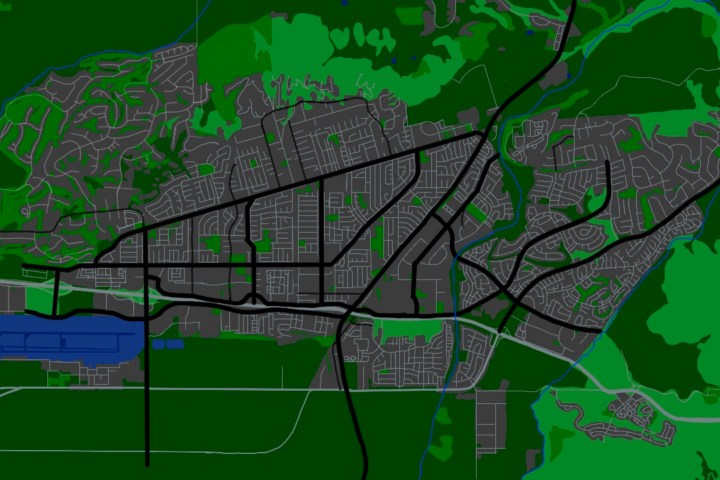
As a member of the CI community, you are probably familiar with most of the major roads that go through Camarillo — you may even take them for granted. But do you know the history behind the roads and how they got their names? If you are anything like me, the answer might be yes, but you have never had the chance to look into them. I have compiled as many histories for Camarillo’s roads as I could find, and I wrote this article to share what I have learned with you.
PLEASANT VALLEY ROAD
Pleasant Valley Road is named for the valley in which Camarillo sits, surrounded by the Santa Susana Mountains, the Camarillo Hills and Santa Monica Mountains.
SANTA ROSA ROAD
Santa Rosa Road is named for Santa Rosa Valley, which sits immediately to the east of Camarillo.
VENTURA BOULEVARD
Ventura Boulevard is the oldest road in Camarillo, however it was not always called “Ventura Boulevard.” For much of its history, it was known as “Old Conejo Road.” Before the Camarillo section of the 101 Freeway was built, Old Conejo Road was the main thoroughfare for anyone passing through town. It got its name because it extended all the way up the Conejo Pass and beyond. After the freeway was built, however, the name was changed to “Ventura Boulevard” because the road no longer went over the Conejo Pass.
LAS POSAS ROAD
Starting in the early 1800s, the Mexican government began rewarding loyal citizens for their service by giving land grants in the former Mexican territory of California. These grants were known as ranchos. What would become Camarillo evolved from one of these land grants called Rancho Calleguas. Las Posas Road gets its name from Rancho Las Posas, which neighbored Rancho Calleguas to the north.
SPRINGVILLE DRIVE
Springville takes its name from an early farming community that predates Camarillo. It was located on and around the current site of the Camarillo Airport. Springville had its own school, post office and general store. When the Camarillo train depot was built, Camarillo’s growth accelerated and Springville faded out of existence.
ADOLFO ROAD
The story of Camarillo starts in Mexico City, 1834. Don Jose Maria Hijar believed himself to be the next governor of California, which was Mexican territory at the time. He gathered an expedition of more than 200 people to accompany him to California’s capital, Monterey. The Hijar Expedition included a 22-year-old man named, Juan Camarillo. But when the expedition reached San Diego they were informed that due to a clerical error, Hijar was in fact, not going to be the next governor of California. When they learned this fact, the expedition was essentially abandoned and its members were left to fend for themselves. Many in the party, including Juan Camarillo, decided they would continue their journey North to Monterey anyway. When they reached Santa Barbara, Juan Camarillo fell in love with the area and decided to stay.
Upon settling in Santa Barbara, Camarillo became a merchant and traveled up and down the coast of California, buying and selling his wares to make a living. His travels took him from mission to mission, back and forth between San Diego and San Francisco, relying on the generosity of Mission Padres for his survival. In 1841, Juan Camarillo married Martina Hernandez. She was the great granddaughter of a sergeant in the first Spanish expedition to explore the San Francisco peninsula and the daughter of the San Luis Rey Mission administrator.
Once he accumulated enough wealth, Juan Camarillo was able to settle down and open up his own shop, first in Santa Barbara then in Ventura. After running a successful business, Juan Camarillo started investing in land. In 1876, he purchased Rancho Calleguas from the son of a Mexican land grant recipient. Rancho Calleguas encompasses what is now the eastern half of Camarillo and most of Somis.
Juan Camarillo and Hernandez had 14 children. Their oldest son was Adolfo Camarillo. At age 16, Adolfo Camarillo began managing Rancho Calleguas, and took over full operation of the property when he was 21. He, along with his brother Juan Camarillo Jr, inherited Rancho Calleguas after their parents’ death, though Juan Camarillo Jr. was more interested in world travel, so he left Adolfo Camarillo to manage the land on his own.
When Adolfo Camarillo inherited the property, it was only suitable for growing small amounts of grain and grazing cattle. Always the innovator, Adolfo Camarillo irrigated the property with water from local fresh water springs. During his lifetime, Adolfo Camarillo saw his land grow from relatively unusable to one of the most vibrant agricultural communities in all of California. He grew walnuts, citrus, corn, barley, hay, alfalfa, black eyed beans and perhaps most importantly for the city of Camarillo’s place in history: lima beans. Adolfo was also a breeder of cattle, pigs, sheep and horses. He bred his own new breed of horse, which he called the Camarillo White Horse. In 1892 he built his home, which stands today as the Camarillo Ranch House.
The reason the Camarillo name was chosen for the name of the city goes back to the town’s first post office. After the train depot was built, and the community started growing, leaders decided it was time for the area to have its own Post Office. They submitted their original application with the name “Calleguas,” paying homage to the old rancho. The application was rejected because “Calleguas” was deemed too difficult to pronounce. Therefore, the community resubmitted the application with the name “Camarillo”, the name of the man who owned Rancho Calleguas.
LEWIS ROAD
The City of Camarillo would not be what it is today had it not been for Joseph F. Lewis and the lima bean. Lewis was the son of a California gold rush miner. His father, Henry Lewis, first encountered lima beans during a chance encounter with a group of traders from Peru. They gave him some of these beans, and his son Joseph experimented with growing them on the family’s Carpinteria property. Lewis was the first person to plant lima beans in North America. After finding success growing lima beans on his father’s farm in Carpinteria, He bought a plot of farmland adjacent to Adolfo Camarillo in 1899. CI’s campus sits on land that was once a part of the Joseph Lewis ranch. At the peak of its operation, Lewis’s ranch produced two and a half tons of lima beans per acre. With 2000 acres devoted to growing lima beans, Lewis became an extremely wealthy man. In his honor, the section of Somis Road located in The City of CamarilloCamarillo section of Somis Road was renamed to “Lewis Road.”
Upon seeing Lewis’s success with lima beans, others in the area followed suit. By 1915, Ventura County had more acres of lima bean farmland than anywhere in the world and produced 75% of the world’s lima beans. In addition to lima beans, Lewis also grew hay and grain and raised pigs and cattle. Between 1901 and 1906, Lewis and Adolfo Camarillo even operated a dairy farm together. As the agricultural community grew into a small town, Lewis built the first retail building in The City of Camarillo. That building still stands today and is the current home of The Twisted Oak Tavern bar and restaurant.
DAILY DRIVE

Another family instrumental to the formation of Camarillo were the Daily brothers: Charles Jay Daily, Erastus Wright Daily and Wendell Phillips Daily. The two older brothers, Charles Daily and Erastus Daily were working on a farm in Michigan, when they were recruited to move to California by John D. Patterson, a farm owner in Hueneme (who also has a road named after him in the Oxnard and Port Hueneme area). Charles Daily relocated in 1881, followed by Erastus Daily in 1884, and then the youngest brother Wendell Daily in 1890. After working for Patterson for several years, the trio set out on their own in Camarillo. They would go on to operate one of the most successful farms in the area.
The homes of Wendell Daily and Charles Daily both continue to stand today. Wendell Daily’s home is now occupied by the Ivy Lawn Funeral Home on Daily Drive and Charles Daily’s home is now the Ventura County headquarters for The Boy Scouts of America, also on Daily Drive.
The brothers were prominent in local politics. They were instrumental in making Camarillo, as well as the rest of Ventura County, what it is today. Wendell Daily’s grandson, Stanley Daily, was also an important figure in early Camarillo history. He served on the first city council, and was elected to be the city’s second mayor.
CARMEN DRIVE
Carmen Camarillo Jones was Adolfo Camarillo’s youngest daughter. By all accounts, Jones was a beloved member of the community. Stanley Daily reflected in his memoir Camarillo and Other Remembrances, “Carmen was my idol. Jones was so reserved and aristocratic in her later years. just exuded quality and sophistication. A gentler person you never met. Many are the time that I was able to visit with her at the ranch and talk about the ‘old times’ which she helped forge.”
When Adolfo Camarillo passed away, Jones took over the Camarillo family estate and continued caring for and breeding the family’s prized Camarillo White Horses. The horses were her passion. Jones frequently appeared on horseback in local parades. She was a skilled artist, musician and cook. Fearing that there were not enough opportunities for local girls, she started a Girl Scout Troop that met at the Camarillo Ranch House. She passed away in 1987 at the age of 87.
EARL JOSEPH DRIVE
Earl Joseph Road was named for Earl Joseph, a long time shoe store owner. Joseph was elected Camarillo’s first mayor when the city was incorporated in 1964.
FLYNN ROAD
Flynn Road was named after Michael and Sarah Lavelle Flynn, Irish immigrants who first met in San Francisco. The couple married in Ventura in 1879. They did business in Los Angeles before moving to Pleasant Valley to raise sheep, walnuts and of course, lima beans. The couple had nine children. The Flynns were a prominent family in Camarillo during its early years. Their descendents would go on to hold titles like county supervisor, judge, librarian and the city’s first treasurer.
ARNEILL ROAD
Arneill Road is named after John and Elizabeth Arneill. John Arneill first immigrated to Wisconsin from Scotland to work as a painter and then a grocer. Elizabeth Arneill followed him from Scotland in order to marry him. After living together in Wisconsin for twenty years, the couple moved to Southern California, eventually settling in Camarillo sometime around 1888. The home they built on their property became a local landmark. John Arneill named their home ‘Raemere’ in honor of Elizabeth’s maiden name, Rae. Today there is a small residential road near Burger King called Raemere Street, in honor of the historic home. He met a premature death in 1894 in a horse wagon accident. The Arneill family would continue to manage the family ranch for three generations and play major roles in the formation of The City of Camarillo. The Arneills grew lemon, oranges, walnuts and lima beans on their property.
The memories of Camarillo’s history are preserved in the names of its streets. Maybe they did not know it at the time, but the people who settled here over a hundred years ago laid the foundations for the community that we all know and love today. I hope learning about these pioneers will inspire you to do something great. Who knows? Maybe one day you will have a street named after you!
