
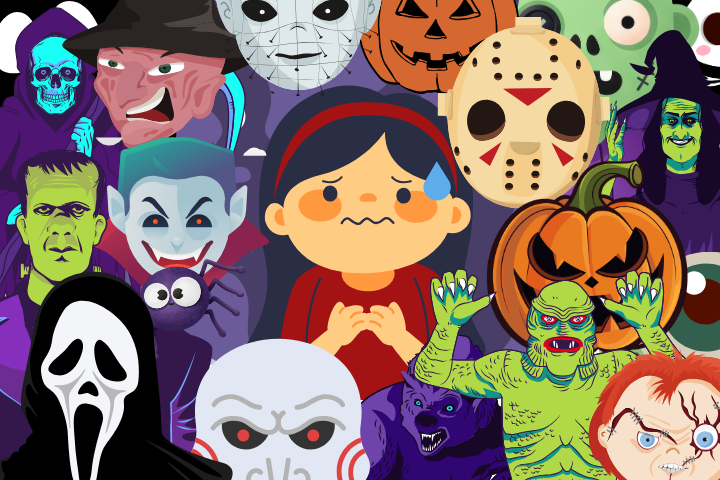
Graphic by Dani Ramirez
Written by Esmeralda Meckler
Last weekend, I went to Halloween Horror Nights with a friend and I kept asking myself, why do we choose to come to this? The whole point is to get scared, yet we willingly step into it. Why is being chased by a clown with a chainsaw fun, when at any other time of year it would be terrifying and abnormal?
With those questions in mind, I wanted to explore why fear during the month of October attracts us and how the human brain reacts to it.
Understanding Fear
Fear is a basic human emotion, rooted in survival. When a threat appears, the brain’s amygdala sends rapid signals to the body. Adrenaline spikes, the heart races and the senses heighten, all to prepare for fight or flight.
Fear helps humans stay alive by forcing focus and fast reactions. Yet, when we know we are safe, such as watching a horror movie or entering a haunted house, that same system can produce enjoyment instead of distress.
The Science Behind the Thrill
When people experience a “safe scare” the body releases adrenaline and endorphins. Once the perceived threat passes, dopamine floods the brain, producing a sense of relief and excitement. This chemical rush explains why roller coasters, haunted attractions and horror films attract millions. Being scared in a controlled setting can actually reduce stress, improve mood and strengthen social bonds.
Researchers call this “benign masochism,” the pleasure of experiencing negative emotions without real danger. The body reacts as if it’s in danger, but the mind knows it is not.
Why We Seek Fear
Not everyone enjoys being scared, but those who do are often sensation seekers, individuals who crave stimulation and novelty. For them, fear becomes a form of play, a way to test boundaries and experience emotional highs.
Being scared also gives people a sense of mastery. When they overcome a fear-inducing situation, they feel stronger and more confident. This explains why many leave haunted houses laughing, not trembling.
Fear and Social Connection
Fear is not only an individual reaction, it is deeply social. Sharing a frightening experience can strengthen bonds. Screaming together in a haunted maze or clutching a friend during a jump scare creates instant connection.
It is known that fear activates the same regions of the brain involved in social bonding. When the body’s threat response ends, the relief and laughter that follow release oxytocin, which is the “trust hormone.” Oxytocin is released when fear subsides and the body relaxes. It promotes feelings of safety, connection and emotional warmth, counteracting the stress of fear. This shift helps us rebuild trust, both in ourselves and in others after a threat, making us feel calm, bonded, and more open to social connection.
Halloween Connection
Every October, people embrace fear on purpose. From horror-movie marathons to neighborhood haunted houses, Halloween transforms fear into celebration.
The costumes, darkness and eerie atmosphere all play with the psychology of fear, allowing people to explore danger, identity and imagination in a safe, communal setting. Masks let us experiment with hidden parts of ourselves, while spooky settings provide an adrenaline rush within clear boundaries.
Halloween is more than candy and costumes. It is a cultural ritual that channels ancient survival instincts into joy. It turns fear into fun. Fear may be universal, but the thrill of safely confronting it is what makes it fascinating.
So, the next time you walk through a haunted house or feel your heart pound during a scary movie, remember: Your body is reacting exactly as it should, and your brain is enjoying every minute.
