
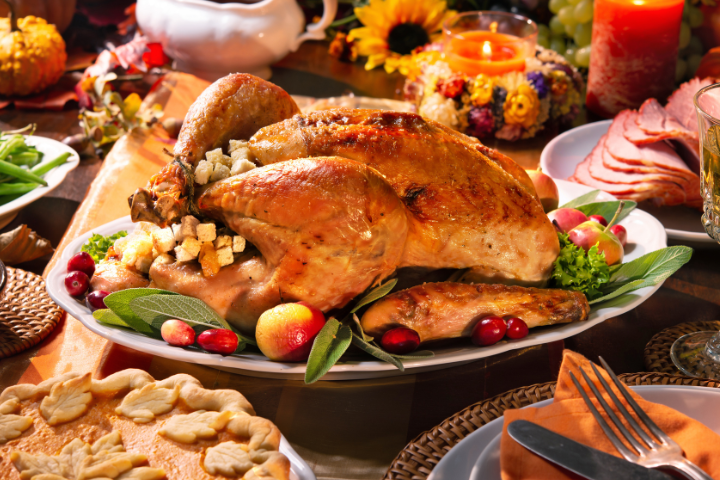
Graphic by Dani Ramirez
Written by Esmeralda Meckler
As families across America gather around tables next Thursday to mark Thanksgiving, the holiday’s traditional narrative of harvest-feasting and unity is being questioned.
A growing movement calls for a re-framed observance: one that celebrates gratitude while also acknowledging the historical harm inflicted upon Native peoples and supports steps toward reconciliation.
The Origin
The well-known story of the 1621 “First Thanksgiving,” where Pilgrims and Wampanoag people shared a peaceful meal, represents only part of the truth. According to the National Museum of the American Indian, this version gained prominence in the mid 1800s as a tool for national unity, disregarding the violence and displacement that followed colonization.
In reality, the Wampanoag had already endured years of suffering before that feast, European diseases had devastated their population, and their sovereignty was under threat. Historical accounts indicate that the 1621 gathering was not a symbolic celebration of friendship but a diplomatic meeting after the Pilgrims arrival on Wampanoag land. Within a generation, peace fell apart as English settlers spread out, and wars like King Philip’s War (1675–1678) destroyed many Native communities and helped the colonies take control.
Cultural survival, a nonprofit indigenous rights organization, states that many Indigenous communities regard Thanksgiving not as a celebration but as a reminder of loss. Some mark the day as a time of mourning for the devastation brought by colonization, disease, displacement and broken treaties.
Why reconciliation matters
Reconciliation requires acknowledging historical accountability. The simplified Thanksgiving narrative has long obscured the realities of colonialism: Indigenous communities forced from ancestral lands, their cultures and sovereignty undermined. According to the National Museum of American Indian, the traditional Thanksgiving narrative erases the realities faced by Native Americans, making them invisible in modern culture, excusing past colonization, and hindering genuine understanding of Indigenous experiences.
Turning the holiday into a moment of reflection means recognizing that gratitude and remembrance can coexist. There is space to celebrate community, family and shared blessings, while also honoring the contributions and resilience of Indigenous people, and facing past injustices.
How to Turn Thanksgiving into a Day of Reflection and Learning
According to native led organizations such as Seeding Sovereignty, Society of Native Nations and NDN Collective, families and communities can take several steps to bring more honesty and respect into their Thanksgiving traditions.
-Include Indigenous perspectives: Share resources from the National Museum of the American Indian and other Native-led groups to present fuller, more accurate accounts of history.
-Broaden the idea of gratitude: Look beyond the Pilgrim-centered story to recognize the enduring presence, cultures and contributions of Indigenous peoples today.
-Make space for remembrance: Understand that Thanksgiving carries mixed emotions for many Native Americans, for some, it is a day of mourning, and reflection is an important act of respect.
-Promote Indigenous rights and equity: Support Native-led organizations, learn about treaty rights and land issues, and stay informed on current Indigenous struggles for justice.
-Encourage thoughtful teaching: Use the holiday as an opportunity to discuss how history is told, whose perspectives are included or excluded, and how national myths shape understanding.
Shifting Thanksgiving does not mean entirely abandoning tradition. Many will still gather for turkey, pie, travel, and family. What changes is the meaning behind it, transforming a day of uncomplicated thanks into one of layered reflection; grateful for the present, aware of the past, and committed to respectful relationships with Indigenous communities.
In doing so, we open a space for healing. We honor both our shared abundance and the histories that preceded it. We turn narrative into responsibility, feast into fellowship and myth into meaningful memory.
