
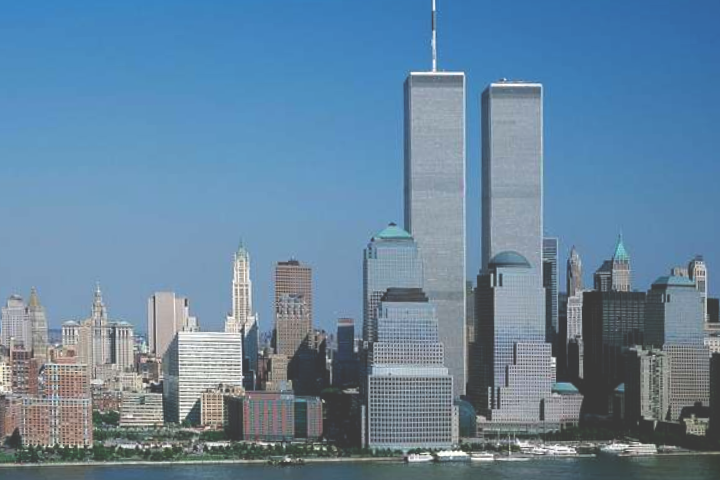
The World Trade Center’s north and south towers rising above the surrounding buildings in the New York City skyline.
Photo courtesy of Library of Congress, Prints and Photographs Division
By Chelsea Grandpre
Sept. 11, 2001, marked a profound day in history which initiated changes that continue to shape America 25 years later. As the country marks the 25th anniversary of the attacks, the milestone offers a chance to look back at the changes that followed and how the nation has continued to remember the 2,977 lives lost. There were shifts to stricter national security, as well as how each generation continues to recall the events of 9/11 every year.
The ripple effect
In the years following the attacks, the way of life shifted for the country from comfort to fear and the changes to national security became a part of everyday life. The Department of Homeland Security, DHS, was created in 2003, as a response to the attacks of 9/11. DHS brought together 22 federal agencies and offices under a single department with a mission to protect the country from terrorism and other various threats. Air travel underwent substantial changes following 9/11, one of the most recognizable changes specifically was the creation of the Transportation Security Administration, known as TSA. Almost a month after the attacks, TSA was established. The federal agency took over responsibility for airport security, which created the standardized security protocol for travelers in the
United States.
A quarter-century of remembrance
As the years passed, the remembrance of 9/11 evolved, with each milestone anniversary providing opportunities to honor those lost and reflect on the lasting impact of the attacks. Helen Alatorre, Associated Students Inc. Executive Director, was a graduate student at the University of Maryland during the attacks. Living near Washington, D.C., she watched the events unfolding from the East Coast on that day. “Turned all the televisions on and we were watching as I was a graduate student and a staff member in the student union at the time.” Alatorre also recalled what it was like during that time in Washington D.C. “Walking home and ash was falling from the sky,” Alatorre explained. “It’s like it’s almost like it was snowing.”
On the first anniversary, the events remained fresh in the minds of those who experienced them firsthand. Andrew Doran, a ’20 CI alumni, recounts the day as a sixth grader living in Colorado at the time. “I remember it just being really scary and not knowing what was happening and trying to figure out what this meant,” Doran recalled. “And obviously, as a 12 year old, you don’t have those answers.” Generations recall the day differently, although the impact of the events remained the same.
Across the country, memorials and ceremonies marked the anniversary by honoring the 2,977 individuals killed in the attacks. Family members of those lost, first responders and people gathered all over the country to remember those lost and affected by the tragedy. On Sept. 11, 2002, CNN reported the gathering of victims’ families at the “Circle of Honor” at Ground Zero to mourn the loss of their loved ones. Slowly, families congregated seven stories below street level at the memorial site for the reading of victims’ names, making it a place for loved ones to remember those lost.
Ten years later in 2011, the anniversary reached a significant milestone. In 2011, the National September 11 Memorial & Museum opened, in memory of the 2,977 people who died in the attacks. Two reflecting pools mark where both the north and south towers stood before they were attacked. Lining them are the names of everyone who was killed in the initial attacks, including first responders and flight passengers. The pools are a permanent place for visitors to reflect and honor those who died. There were ceremonies held at the opening ceremony that included moments of silence and tributes from families, public leaders and survivors.
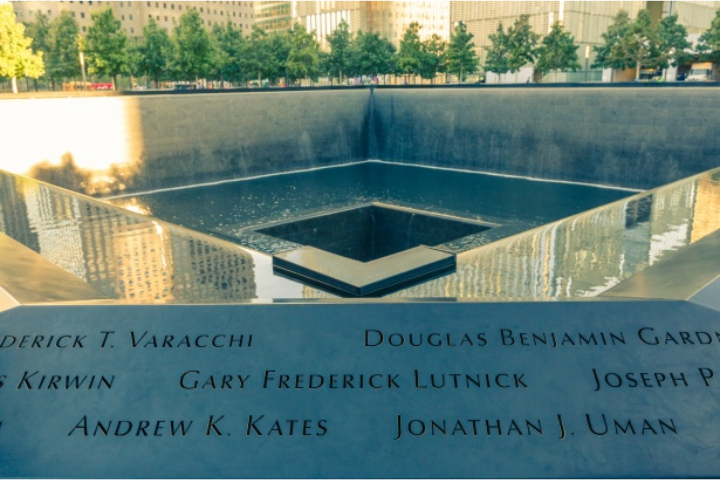
The reflection pools where the World Trade Center once stood in New York City. Names of those who lost their lives in the attacks line the pools, creating a space to honor and remember those lost.
Photo courtesy of Petr Kratochvil
By the 20th anniversary, remembrance took form in the of teaching younger generations about the lasting impact of 9/11. The day has become an event that is learned about through stories, history lessons and news coverage. Cooper Prachyl, a first year information technology major, first learned about 9/11 in history class. Unlike those who experienced the attacks firsthand, his understanding of the event was taught through lessons about what happened rather than personal memories. “It was presented as a tragedy, but it was never really shown like the actual effect that it caused,” Prachyl said. “It was just shown as like, this happened on this day and what happened?” The anniversary two decades after the attacks focused heavily on remembering and honoring the people who lost their lives, but it also served as a way to preserve their stories for generations to come. The National September 11 Memorial & Museum created the 9/11 Anniversary Digital Learning Experience, which commemorated the 20th anniversary through a 35-minute video with firsthand accounts and the aftermath of the attacks. In 2021, the video was free to access, providing schools with informative lessons on the anniversary. Steven Silva, a second year biology major, similarly noticed a difference between how 9/11 was talked when he was in school versus how it was talked about for earlier generations of students. “I feel like in earlier generations, we went more in depth,” Silva said. “I feel like as you get older in school, they don’t talk about it as much anymore.” 20 years later, ceremonies were held that remembered the victims of 9/11 and educational programs continued to ensure the understanding of the lasting impact to the children without firsthand memories of the day.
What now remains
Now, in 2026, the nation commemorated 25 years since the attacks on Sept. 11, 2001. An important change to the quarter-century commemoration was the addition of a seventh moment of silence, reported by CBS. Over the last 24 years, the annual ceremony of remembrance was six moments of silence marking the times when flights 11, 175, 77 and 93 crashed, as well as the moments when each of the Twin Towers fell. Now, in 2026, the seventh moment of silence honored the people who died from the effects of health implications faced in the aftermath of 9/11. The new addition helped bring to light to the impacts of 9/11 and how they continued substantially after the attacks. The anniversary continued the annual traditions of honoring the people killed in New York, the Pentagon and the lives lost near Shanksville, Pennsylvania. Not only this, but it served as an opportunity to remember how the country has been affected following the attacks of 9/11. According to the National September 11 Memorial & Museum, about 100 million Americans do not remember firsthand the events taking place on 9/11. As a result, the remembrance 25 years later includes teaching new generations about the loss, perseverance and the unity that followed the attacks. This year, the National 9/11 Memorial & Museum continued to use the 9/11 Anniversary Digital Learning Experience for educational purposes and to preserve the accounts of those affected.
Another lasting way that New Yorkers honor the 25th anniversary was through Bryant Park’s display of 2,753 chairs spread across the park in remembrance of the lives lost in the attacks on the World Trade Center specifically. The chairs face south, toward the direction of where the twin towers once stood, turning the busy park into a place of quiet reflection. Visitors place flowers and small mementos on the chairs, allowing the community to honor those who passed away. The Tribute in Light, an art installation that was installed just six months after the attacks, is lit up each anniversary. According to the National September 11 Memorial & Museum’s website the Tribute in Light was built south of the 9/11 memorial and can be viewed up to a 60-mile radius, specifically in the areas surrounding lower Manhattan. On the night of 9/11 each year, the light installation from dusk to dawn lights up in memoriam of those lost in the attacks.
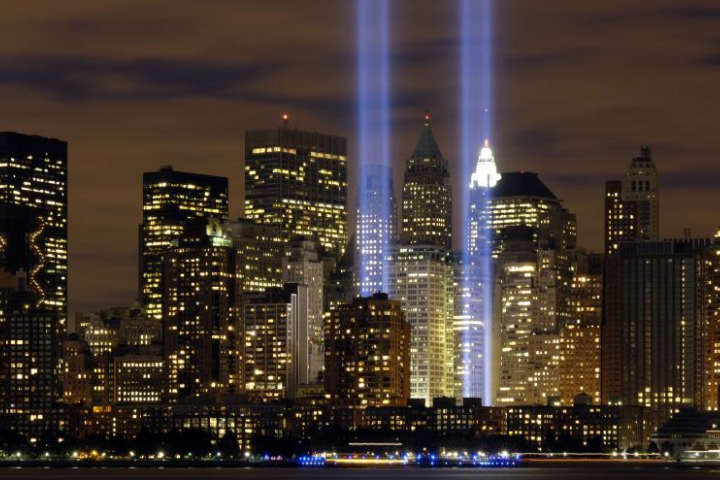
The Tribute in Light in New York City. The Tribute in Light shines bright every anniversary on Sept. 11 from dusk to dawn.
Photo courtesy of Stockvault
25 years later, 9/11 remains both a historical event and an ongoing legacy. People remember the horrific events in ways that have changed over time, from immediate mourning in 2001, to permanent memorials and recognition of the people effected by the impacts of 9/11. As fewer Americans have firsthand memories of the day, preserving its stories and lessons has become an important aspect of its history. The 25th anniversary shows that remembrance is not only looking back on what happened but ensuring that those affected are never forgotten.
