By Kevin Fox
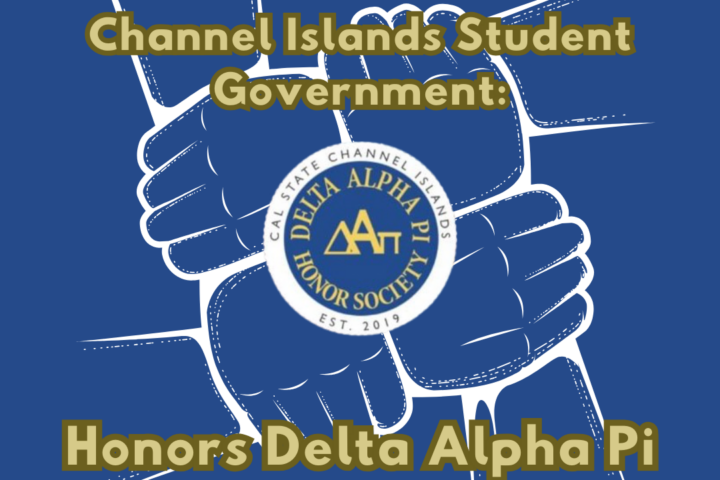
Graphic by Maya Uribe
In a significant move toward inclusivity, CI’s student government recently passed a resolution to honor, honor societies, with Delta Alpha Pi (DAPi) being the first to be recognized. DAPi, a society that acknowledges the academic achievements of students with disabilities, has been instrumental in building a community that fosters connection and advocacy.
To learn more about the impact of DAPi, I interviewed Sarah Ysordia, the current president, Dalton Forrester, a member of the society and Dr. Nick Fuentes, Director of DASS (Disability Accommodations and Student Services).
Ysordia, who developed Usher syndrome at the age of seven, shared the challenges of living with both deafness and blindness. “The hardest part was connecting with communities outside of my family and the deaf and blind community,” she said. Despite these obstacles, Ysordia has triumphed in her academic journey, crediting much of her success to CI’s Disability Accommodations and Student Services (DASS) center. “DASS really developed into a place that provided me with the right resources, like Tactile Sign Language Interpreters and Braille. They made things convenient and accessible.”
Forrester echoed Ysordia’s sentiments, emphasizing how DAPi has created a sense of belonging for him. “Being a person with disabilities can be isolating. You do not have people around you who experience the same things,” he said. “DAPi acknowledges that we have struggles and triumphs, and that’s empowering.”
Both Ysordia and Forrester are passionate about addressing the stigma surrounding disabilities. Forrester, who has autism, shared his personal experience with ableism. “People often think disabilities hold us back, but it’s usually just a matter of small accommodations,” he said. “It’s not a grandiose issue, it’s the advocacy and understanding that make the difference.”
As president, Ysordia is working toward building a more inclusive campus. One of her major initiatives is the creation of the Disability Inclusion Alliance (DIA), which aims to foster partnerships between students with and without disabilities. “We want to combat isolation and loneliness, bring in guest speakers, and create spaces for everyone to connect,” she explained.
Forrester highlighted the need for more awareness and resources, noting that DAPi remains one of the smallest organizations on campus, with limited funding. “A lot of students don’t even know about DASS, let alone DAPi,” he said. “We need to grow and let people with disabilities know that they have a community here.”
In an additional interview with Nick Fuentes, director of the Disability Accommodations and Student Services (DASS) program, I gained further insight into the role of honor societies like DAPi in promoting inclusivity. “I see DAPi as a fantastic opportunity for students with disabilities,” Fuentes shared. “It challenges the assumption that academic success and disability are mutually exclusive. Many people don’t expect to see students with disabilities in an honor society, but DAPi highlights that these students are academically gifted and deserve recognition.”
Fuentes also praised DAPi’s vision in forming the Disability Inclusion Alliance (DIA), which is designed to include everyone—students with disabilities, those who advocate for them and people who want to learn more. “DAPi is about celebrating both disability and academic achievement, but DIA takes it a step further by creating a space where everyone can be involved in supporting disability awareness.”
The DASS program plays an active role in supporting leadership opportunities for students with disabilities. “We provide academic accommodations, but also ensure students have access to all aspects of campus life, including leadership roles,” Fuentes explained. “If a student in a leadership position needs an ASL interpreter or captioning, that’s something we can assist with. Just because someone has a disability doesn’t mean they can’t be the best leader this campus has ever seen.”
Fuentes also sees honor societies like DAPi as powerful tools in reshaping perceptions about disabilities. “The idea of an honor society is traditionally linked to high academic achievement in a certain way. DAPi helps people see that success comes in many forms. It is not about whether students can or can’t do something; it’s that they may do it differently. That is a message our campus—and the world—needs to hear.”
Despite the challenges faced by DAPi, both Ysordia and Forrester remain optimistic about the future. Ysordia hopes to see the society continue to expand, creating stronger connections both on campus and in Ventura County. Forrester envisions more recognition and support from the broader campus community as DAPi grows.
As Ysordia prepares to graduate in the spring of 2025, she dreams of teaching dance therapy and plans to pursue a master’s degree in special education. Until then, she remains committed to her mission of making CI a more inclusive and welcoming place for students with disabilities.
Under Ysordia’s leadership and with the dedication of members like Forrester, DAPi is growing into a powerful voice for advocacy and inclusivity on campus. Through its work, the society is challenging misconceptions and helping to create a more inclusive academic culture at CI.
