
Written by: Esmeralda Meckler
On Aug. 26, Camarillo, California reached 91 degrees, breaking the previous record of 86 degrees set on Aug. 26, 2015, according to the National Weather Service. The record-breaking temperature brought intense heat to CI as students returned to campus for the fall semester. With temperatures reaching the 90s, students were exposed to extreme heat while traveling between classes or participating in campus activities. Staying hydrated and taking breaks in cool, air-conditioned spaces can help reduce the risk of heat-related illness. Students should also pay attention to signs of heat exhaustion, such as heavy sweating, dizziness, weakness and nausea. Whether students are walking across campus, exercising outdoors or commuting to class, these five tips can aid in helping them remain cool and safe during a heatwave.
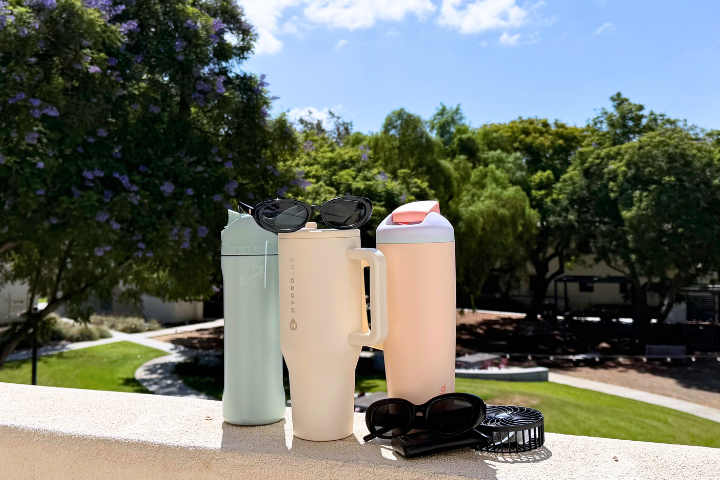
The CI View team’s water bottles, sunglasses and fan.
Photo by Madelaine Brown
1. Stay hydrated
Drink water throughout the day, even before feeling thirsty. According to the American Red Cross, people who sweat heavily can pair water with a snack or sports drink to replace lost salt and minerals. Drinks containing electrolytes could be helpful when exercising or working outside. Try to avoid sugary, caffeinated alcoholic beverages because they can contribute to dehydration.
2. Avoid the hottest hours
Try to remain indoors or in the shade when temperatures are at their highest. According to Ready LA County, people should avoid direct sunlight from 10 a.m. to 3 p.m. The Centers for Disease Control and Prevention (CDC) recommends limiting sun exposure, noting that “UV rays are strongest from 10 a.m. to 4 p.m.” The CDC also advises protecting skin from the sun year-round because UV rays can reach people even on cloudy or cool days and can reflect off surfaces such as water, cement, sand and snow. Students who need to exercise, walk across campus or complete outdoor work should plan those activities for the early morning or evening, if possible.
3. Wear heat-friendly clothing
Choose lightweight, loose-fitting clothing when going outside. Ready LA County also recommends wearing sunscreen and a hat. According to the Skin Cancer Foundation, “Loose-fitting apparel is preferable. Tight clothing can stretch and reduce the level of protection offered, as the fibers pull away from each other and allow more UV light to pass through.” These choices can help protect the skin from sunlight while allowing the body to release heat more easily.
4. Find a cool place
Spend as much time as possible in an air-conditioned building. According to the CDC, students without air conditioning can spend time in air-conditioned places such as libraries, malls and movie theaters. The United Nations Environment Programme also recommended closing curtains or blinds during the day and opening windows after outdoor temperatures drop at night.
5. Carry a portable fan
Handheld and neck fans are convenient options for creating airflow while walking across campus or waiting outside. According to the United Nations Environment Programme, fans can help people feel cooler by increasing airflow across the skin. However, the Centers for Disease Control and Prevention warned that fans should not be relied on when indoor temperatures reach 90 degrees or higher. Portable fans should be used with other precautions, including drinking water, taking breaks and moving to an air-conditioned location.

The sun shining outside of the Student Union Building.
Photo by Madelaine Brown
Dizziness, headaches, nausea, muscle cramps and heavy sweating can be signs of heat exhaustion. Move to a cooler location, rest and slowly drink water if these symptoms appear. Confusion, loss of consciousness, seizures or an extremely high body temperature may indicate heat stroke. Heat stroke is a medical emergency, so call 911 immediately and begin cooling the affected person while waiting for help.
As temperatures reach unbearable heights, taking simple precautions can help CI students remain safe. Drinking enough water, limiting time outside and checking on others can make a difference during a heat wave. By planning and paying attention to their bodies, students can protect themselves while continuing their daily campus routines.
