

Greek letters of CI’s Fraternity and Sorority Life chapters
Graphic by Madelaine Brown
By Morgan McMurray and Delana Ornelas
Greek life, composed of fraternities and sororities, is a characteristic of universities across the United States. Distinguished by their Greek letter naming and dedicated recruitment process, fraternities for men and sororities for women aim to foster a sense of belonging among “brothers” and “sisters.” This is done through unique social rules and traditions, networking opportunities and community service, according to History Extra’s article, “What is Greek life?” This pieces offers a look at the history of fraternities and sororities, as well as introducing CI’s Fraternity and Sorority Life (FSL) on campus.
History of Greek life
Greek life originated out of college literary societies in 18th and 19th-century America. At that time, American university education was very structured. Colleges had the same strict four-year curriculum for all attending students, explained by Frederick Rudolph in his book, “The American College and University: A History.” Students wanted a way to discuss and debate course topics, current events and literature, beyond what was allowed in their classrooms. Thus, students formed groups, literary societies, where they could foster this intellectual camaraderie, as stated by Appalachian State University (App State) in their article, “History of Fraternities and Sororities.” These societies were known and often encouraged by the universities themselves, eventually morphing into places where students could find a sense of belonging in other areas of their lives.
History Extra states that the first fraternity, Phi Beta Kappa (PBK), formed at the College of William and Mary in Virginia in 1776. According to the article, “Founding of the Phi Beta Kappa society,” written by PBK’s Florida State University chapter, John Heath, the first president of PBK, wanted his literary society to be much more serious than the others at the time. To Heath, this seriousness meant hiding his society from most of the people at his college. He gave PBK an oath of secrecy, a badge, a Greek motto — “Φιλοσοφία βίου κυβερνήτης,” meaning “Love of learning is the guide of life” — an initiation ritual, a seal and a special handshake. In 1831, these “secrets” were disclosed, according to App State, which allowed PBK to expand into “chapters” at other universities, beginning with Harvard and Yale, as stated by History Extra.
American women also started their own societies when they began attending college in the 1830s. These societies were originally called “fraternities” as well, according to App State. Unfortunately, nobody truly knows which of these women’s fraternities was the first to form. According to History Extra, a strong contender is Alpha Delta Pi at Wesleyan Female College, Georgia, established in 1851. However, the word “sorority” originated with the Gamma Phi Beta women at Syracuse University, New York, in 1882, as recorded by App State. Gamma Phi Beta’s advisor, a Professor of Latin, suggested the women use the word “sorority,” from the Latin word for “sister,” as opposed to the word “fraternity,” from the Latin word for “brother.”
Most Greek life organizations today have kept their names and traditions to maintain a sense of exclusivity and shared experiences among members, according to History Extra. Today’s Greek life organizations have also largely pivoted away from intellectual discourse, focusing instead on community outreach and hosting social events. This change happened when fraternities and sororities started buying and maintaining Chapter Houses for their members, as explained by App State. Recreational and community-oriented activities became more important because members were formally living with each other and spending so much time together.
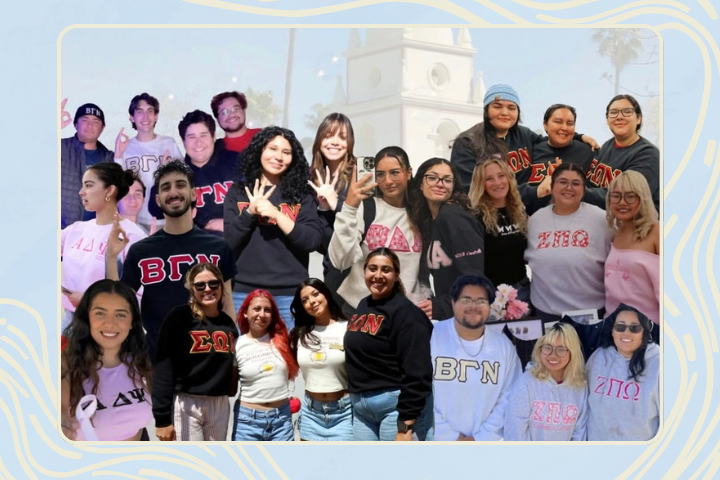
Members of CI’s Fraternity and Sorority Life chapters
Graphic by Julia Gonzalez
A new introduction to Greek life at CI
CI’s Fraternity and Sorority Life (FSL) has a strong legacy, but a reintroduction may help students understand what the community looks like today. FSL offers opportunities many students have not explored yet. For some, Greek life is simply unfamiliar. Others may associate it with stereotypes shaped by decades of movies. Some students may have never given it much thought at all. If you are unsure what a day in the life of a Greek organization looks like, hearing from the students who live it can offer a clearer picture and can encourage students to get more involved.
So, what does Greek life really look like at CI today? According to Annie Block-Weiss, ASI Assistant Director for Leadership & Involvement, it is “a space where students can develop as leaders, build lasting relationships, and find a sense of belonging on campus.” She added, “what I hope students find here is a real sense of belonging–not just while they are at CI, but long after they graduate. These chapters have strong alumni networks, and you never know what connection, opportunity, or next career step might come from your time in Greek life here.”
CI’s Greek community currently includes five chapters: three sororities (Alpha Delta Psi, Sigma Omega Nu, and Zeta Pi Omega), and two fraternities (Beta Gamma Nu and Alpha Sigma Phi). For those unfamiliar with these groups, here is a chapter-by-chapter overview shaped by members who were happy to share their experiences.
Graphic by Julia Gonzalez
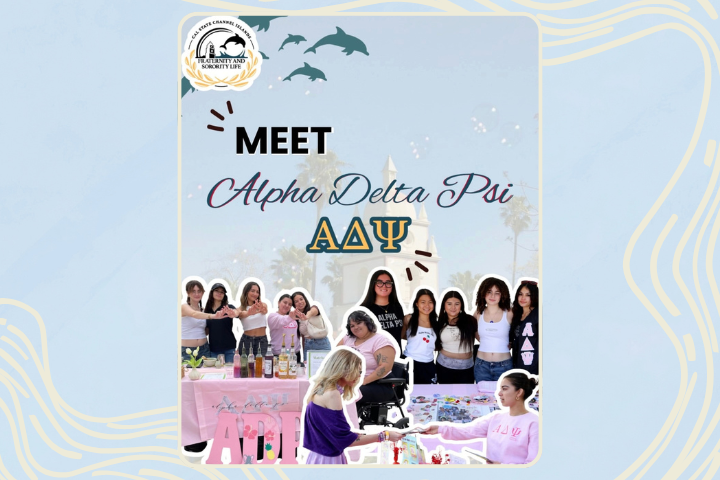
Alpha Delta Psi
Alpha Delta Psi is a sorority rooted in sisterhood, service and empowerment. Members described the chapter as a welcoming space where women support one another and work to make a positive impact on campus and in the community. “Sisterhood and service are two values that best represent our chapter,” said Chapter Vice President Marissa Herrera. “Whether we are spending time together or serving members of the community, we remain committed to supporting one another and making a
positive difference.”
The chapter’s philanthropic efforts support Planned Parenthood and focus on women’s issues throughout the year. Members participate in service projects, campus involvement and sisterhood programming designed to help students grow personally and academically.
Herrera said joining Alpha Delta Psi strengthened her connection to campus and introduced her to students with similar goals. “Being part of FSL has helped me feel more connected to CI and has allowed me to build relationships that I genuinely value,” she said.
Graphic by Julia Gonzalez
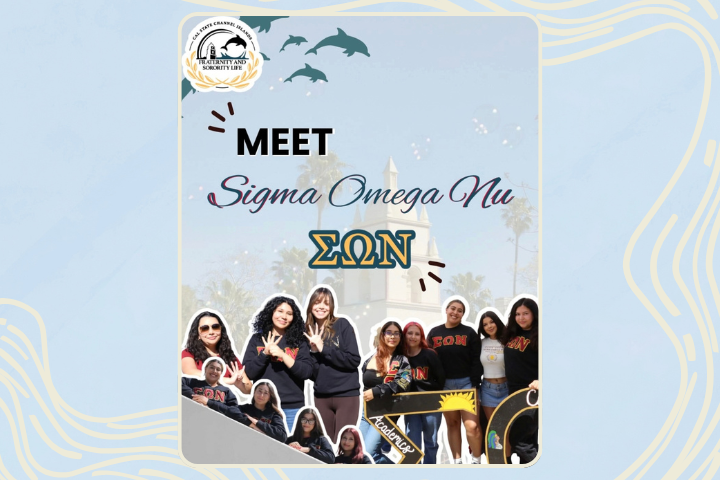
Sigma Omega Nu
Sigma Omega Nu, the Preciosa Pi Chapter, is CI’s Latina interest national sorority. With academics, cultura and sisterhood being the organization’s three pillars of operation, this chapter offers members of a community that celebrates identities, supports one another and encourages the growth of both the sisterhood and the members as individuals.
“At the heart of everything we do is sisterhood.” said Chapter President Jocelyn Saucedo. She was seeking connection when she joined FSL, and that is what she found. “Joining Sigma Omega Nu gave me the sense of community and belonging that I was looking for,” she said. “I found a group of women who encouraged and support me and have helped me become more well-rounded.” She hopes more students understand how involved the chapter is on campus and in the community. “We are always looking for ways to collaborate,” she said.
Members participate in study hours, cultural programming and collaborations with the LatinX Cultural Center. The chapter’s philanthropy supports Many Mansions, a nonprofit serving low-income residents. Saucedo expressed that “Being involved allows us to meet people outside of our chapter and contribute to the overall campus community.”
Graphic by Julia Gonzalez
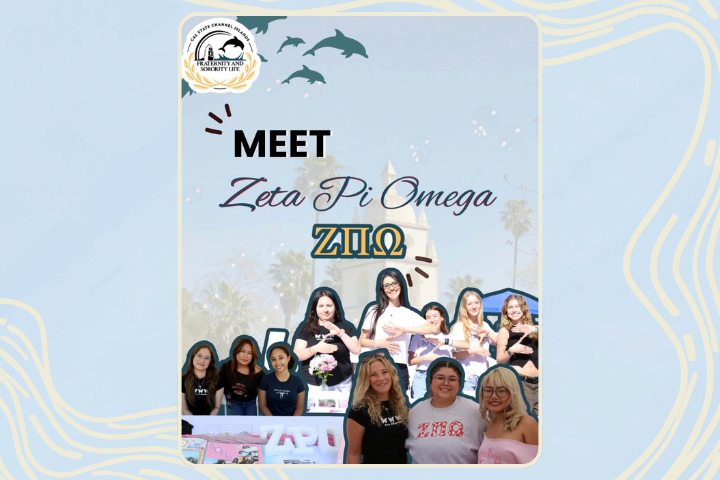
Zeta Pi Omega
Zeta Pi Omega is a sorority dedicated to supporting women and children through service, empowerment, and community outreach. The sorority’s philanthropy focuses on women and child-centered initiatives, with members participating in fundraising, volunteer projects and campus activities that strengthen their connection to the community.
The chapter emphasizes academic success, personal growth, and meaningful sisterhood. Welcoming both residential and commuter students, Zeta Pi Omega creates opportunities for members to connect through studying, service and social events. Their commuter-friendly approach makes it easier for all students to participate and build relationships.
Zeta Pi Omega was founded with a commitment to making a positive difference while helping members become confident, balanced and engaged leaders. Members say the chapter provides a sense of connection and belonging while creating genuine friendships and unforgettable experience
Graphic by Julia Gonzalez
Beta Gamma Nu
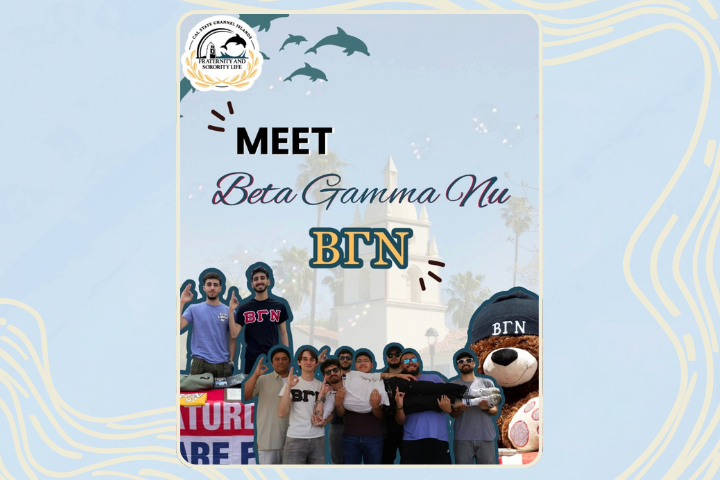
Beta Gamma Nu is a fraternity built on cultural pride, brotherhood, and respect. Founded in 1997 at USC, the organization brings men from diverse backgrounds together to support one another, pursue academic and professional goals and develop as leaders. The Kappa Chapter has proudly been part of CI since 2017. “Beta Gamma Nu is a brotherhood that feels more like a family than just a college organization,” said Chapter President Enzo Laraneta. “We come from different backgrounds and have different personalities and opinions, but there is a lot of trust and support between us.”
Academics are central to the fraternity’s mission, with members encouraging one another to excel while building meaningful connections. Through leadership opportunities, professional development, service projects, campus involvement, community outreach and social events, members grow personally and professionally while contributing to their communities. Chapter Vice President Paul Zitron said the organization focuses on preparing its members for life beyond college. “We want our brothers to leave college prepared to lead in whatever they decide to do,” he said. “The goal is to help develop men who are confident and capable of leading others while staying true to our values of Pride, Brotherhood, and Respect.”
Beta Gamma Nu aims to provide members with a strong sense of belonging and a network that extends beyond college. The friendships, confidence and experiences gained through the fraternity continue to shape members long after graduation. “For me, the most valuable part of my experience has been the people and the opportunity to grow alongside them,” Laraneta said. “You can join an organization as one person and graduate with leadership skills, professional connections, friendships, memories, and people who have supported you throughout college.”
Graphic by Julia Gonzalez
Alpha Sigma Phi
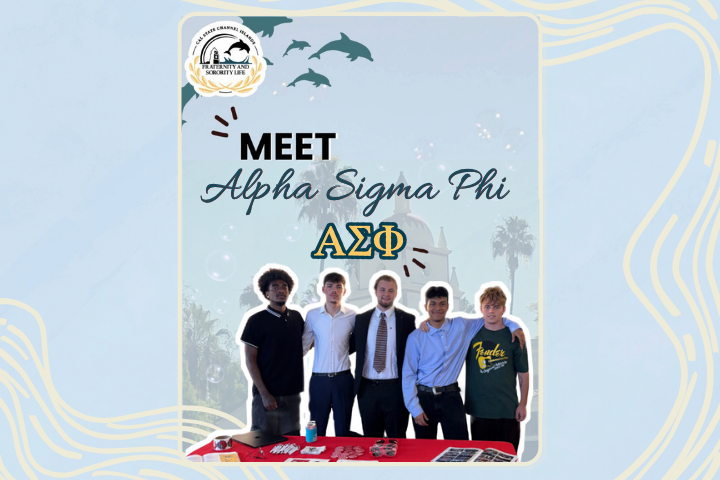
Alpha Sigma Phi is the newest fraternity on campus, giving students the chance to become founding fathers and shape a chapter from the ground up. “Becoming a founding father gives students the chance to leave a lasting impact and legacy at CSUCI,” Coordinator of Chapter Services Lucas Hannan emphasized.
Hannan’s relationship with the fraternity began at McDaniel College in Maryland, where he joined in fall 2023. He was drawn in by the way the brothers carried themselves on campus. “Their leadership was unmistakable,” he said. After completing Alpha Sigma Phi’s internship program, he was selected to work for the fraternity’s headquarters upon graduating in 2025. Since then, he has traveled around the country offering coaching, mentoring, recruiting and support to chapters nationwide.
At CI, Hannan said the chapter can offer students leadership, connection and community involvement opportunities. He believes that when Greek organizations are run with genuine intention, they can open doors students might not otherwise have access to. The chapter is recruiting students interested in becoming founding members.
A community built on connection
Today, FSL is a community shaped by students who are experiencing everything they have to offer. For many, college has become much more than a place to earn a degree; joining a chapter has made this campus feel like home. Members said their chapters have helped them form close friendships and feel more connected to campus. Across all organizations, students describe Greek life as a place where they found belonging, opportunities to give back and the life skills that will carry them beyond graduation. For students curious about Greek life, Formal Recruitment (Oct. 1–4) offers a chance to meet all chapters and explore what each one has to offer. As Block-Weiss put it, “go in with an open mind. You never know where you might end up until you give it a try.”
