
Graphic by Dani Ramirez
Written by Steven Mynott
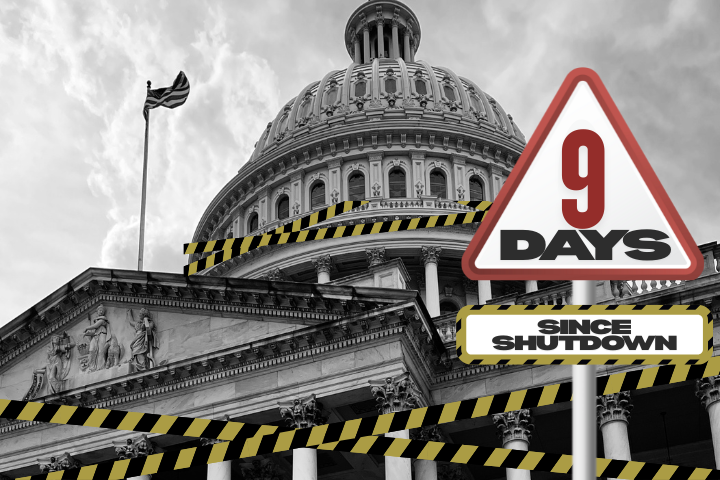
Late on September 30 Pacific time, the federal government shutdown. The shutdown comes after the U.S. Senate failed to agree on a budget for the coming fiscal year. The primary sticking point between senate Democrats and senate Republicans is centered around healthcare spending. Democrats want to extend expiring tax credits that make health insurance more affordable for Americans, as well as reverse spending cuts to Medicaid passed as part of the One Big Beautiful Bill Act. Medicaid provides health insurance to tens of millions of low-income and disabled Americans. Without the expiring healthcare tax credits, middle class Americans could see their health insurance premiums more than double. Republicans, on the other hand, favor a temporary stop-gap budget bill that would allow the government to reopen and facilitate further negotiations. Before the shutdown, the Republican-controlled House of Representatives passed a bill that would fund the federal government through seven weeks, but the bill failed to pass in the Senate. Democratic Senators refused to vote for it because it came with no assurances that healthcare for Americans would receive any funding.
In the meantime, many, but not all, government services will continue to provide their normal services including the military, Immigration and Customs Enforcement, Air Traffic Control, the U.S. Postal Service, Social Security, and Medicare.
During the shutdown, each government agency is required to designate which employees are “essential” and which employees are “excepted.” Essential employees are still expected to carry out their duties as normal without pay. Once the government reopens, they will legally be entitled to back-pay for the work they did during the shutdown. On the other hand, excepted employees are placed on unpaid leave, also known as a furlough, until the government reopens. Private contractors who work with the federal government will also be out of work until the end of the shutdown. The President and all members of congress will still receive their paychecks during the shutdown.
Of primary concern to CI students is how the shutdown will affect the Department of Education. Out of a total of 747 employees, the department has furloughed 632 of them, or about 87% of its workforce. However, the department does have a contingency plan in place to make sure that services continue to operate as usual, at least in the short term. Student loans will still be collected, Free Application for Federal Student Aid or FAFSA applications will still be open and federal aid will still be dispersed. Federal Student Aid is considered an essential service, so students will still be able to contact their loan issuer if they have any questions. It is still unclear how Department of Education operations will be affected if the shutdown continues in the long term.
How will the shutdown end? The short answer is that congress needs to agree on a bill to fund the federal government. So far, neither Democrats nor Republicans seem willing to break the legislative stalemate.
***This article was last updated on October 10. We will continue to update it as more information becomes available.***
Due to the government shutdown, SNAP benefits, including food stamps, may not be issued starting in November.
