

Graphic by Dani Ramirez
By Chelsea Grandpre
Each year, Hispanic Heritage month, also known as Latinx Heritage Month, is celebrated to create the opportunity to recognize the contributions, culture and history of Hispanic and Latinx communities all over the world, according to the article, “Hispanic Heritage Month 2026: Dates, Theme & Celebrations” by Luis Martinez. This year, the month is observed throughout the dates of Sept. 15 through Oct. 15. This piece takes a closer look at the history of Hispanic Heritage Month and its significance, as well as highlights CI’s own LatinX Cultural Center.
History and origins
The month of Hispanic Heritage started out as a week to commemorate the Hispanic community, originally introduced by California Congressman George E. Brown in 1968, as stated in the article, “Hispanic Heritage Month” by HISTORY. Legislation was created and it was signed into law as a week-long observation by President Lyndon B. Johnson the same year. In 1988, it was again signed into law by President Ronald Reagan, but as a month-long observation. It was finally declared as a 31-day observance from Sept. 15 to Oct.15 by President George H.W. Bush in 1989.
The article by HISTORY also expanded on the significance of the date, Sept. 15. The date coincides with many countries in Latin America’s Independence Day. Costa Rica, El Salvador, Guatemala, Honduras and Nicaragua declared their independence from Spain on Sept. 15, 1821. While this date is not necessarily the date of independence for all Latin America countries, the months of July through September hold significance as being the months where a majority of Latin American countries won their independence.
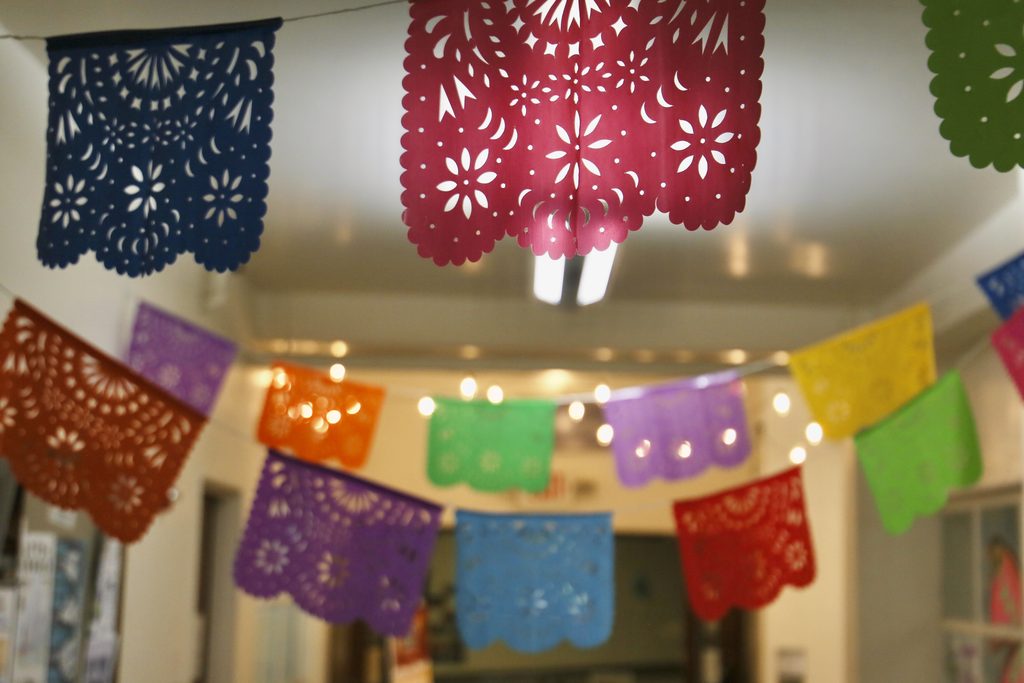
Colorful papel picado (“perforated paper”), a traditional Mexican art, hanging in the halls outside CI’s LatinX Cultural Center
Photo by Chelsea Grandpre
Understanding the terms
Depending on a person’s background, geographical location or their identity, there are different terms that are used to refer to someone from Latin America. In turn, there are different meanings within different communities. An article from the Cambio Center at the University of Missouri titled, “Hispanic, Latin@, Latinx or Latine?,” explained these differences. The term “Hispanic” is refers to communities who have Spanish origin or are Spanish speakers. Hispanic comes from the Spanish word Hispania, referring to the geographical location of Spain. Although this term does not encompass all Latin Americans, only those of Spanish descent.
Chicano/a is another term that is used that refers to a person who was born in The United States, who comes from Mexican origin. The article also stated that it was popularized during the Civil Rights Movement after reclaiming the word from its original intended meaning, a derogatory term referring to low-income Mexican Americans. The term is believed to come from the word Mexicano, which originated in Indigenous roots, according to an article by UNIDOS titled, “Where Does the Word ‘Chicano’ Come From?”
Latino/a is the term that describes a person with origins in Latin America, this includes people from Mexico, South America, Central American, as well as the Caribbean. This is a term that encompasses all people who are from any part of Latin America. In a Spanish guide from Hablamos Escuela de Espanol, every noun is gendered. In this case, “Latino” refers to a male-gendered Latin American, while “Latina” refers to a female-gendered Latin American. The term “Latine” is a term used by people as a gender-neutral alternative to Latino/a. Another gender-inclusive term that is commonly used is “Latinx,” with its origins dating back to the early 2000s. These terms are most common throughout The United States.

Flags of Latin American countries hanging in CI’s LatinX Cultural Center
Photo by Chelsea Grandpre
A diverse heritage
The month-long observance encompasses the entirety of Latin America, with celebrations, traditions and festivities. The article “Hispanic Heritage Month: Celebrating Culture, History, and Contributions in the United States” by Luis Martinez, described the various ways that communities celebrate the month, including parades, cultural and food festivals, as well as educational programs.
“Hispanic Day Parade in New York City is one of the largest, featuring floats, musicians, dancers, and organizations representing various Hispanic countries,” the article explained. Cultural festivals are also a big aspect of the celebration and are typically held in cities with large populations of Hispanic and Latinx communities. People can enjoy music, art and dancing. People can also enjoy traditional foods from various countries, providing a taste of Latin American cuisine. Educational programs are used to promote the month, using lectures, screenings and workshops, which provide an opportunity for students across America to learn about the history of Hispanic Heritage Month. All of these festivities symbolize the coming together of the Hispanic and Latinx communities and allow for people to learn about, participate in and enjoy the cultures that surround the month.
A space for culture and community
CI’s LatinX Cultural Center, located in Bell Tower 1538, provides support for students across the university. According to their page on CI’s website, the “LatinX Cultural Center provides intentional, holistic, and co-curricular enhanced programming designed to promote cultural awareness, leadership development, and a sense of belonging for the diversity of nationalities, languages, and cultures represented under the Latine/a/o/x umbrella.” CI is a Hispanic-Serving Institution, meaning the total undergraduate Hispanic full-time equivalent student enrollment is at least 25%, according to Hispanic Association of Colleges and Universities. The LatinX Cultural Center at CI plays a huge role in supporting the diverse student population and provides opportunities for students to engage with their culture within their campus community.
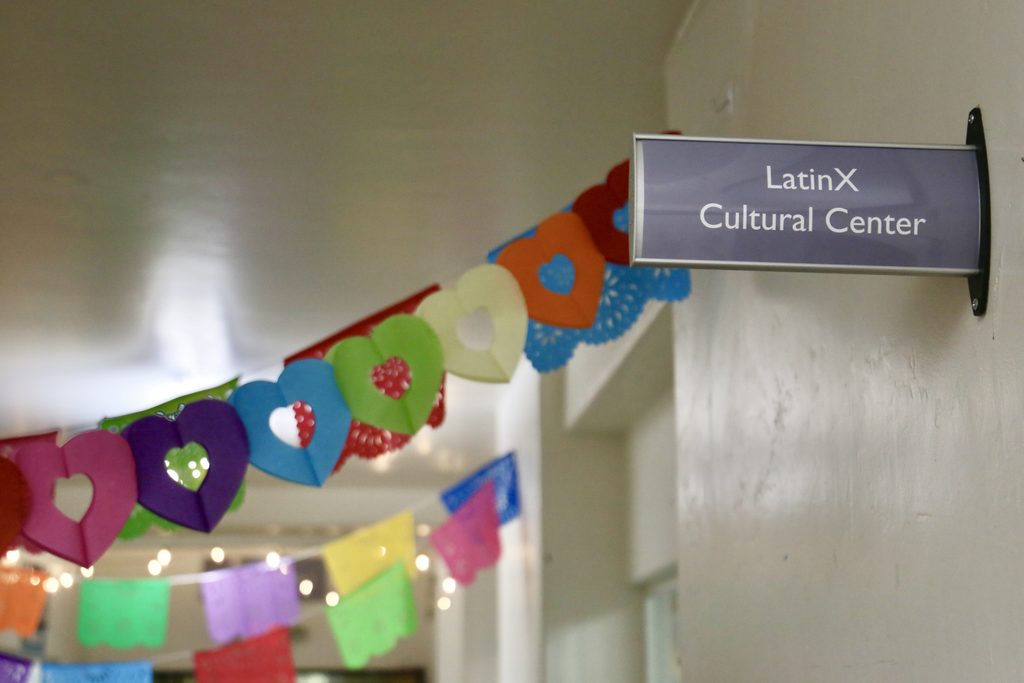
CI’s LatinX Cultural Center, located in Bell Tower 1538
Photo by Chelsea Grandpre
Mariana Sierra, a fourth-year biology major and student assistant at the LatinX Cultural Center, said the center is intended to provide both everyday resources and a place for students to gather. “It’s primarily a community space where everyone is welcome to come in and gather and relax,” Sierra said. The LatinX Cultural Center is preparing for several events on campus. One includes a collaboration with a student starting a crocheting club, where students can come together and make small flowers and flags out of yarn. Another event that the center is hosting is LatinX Level Up, which focuses on videogaming and bringing together students in their space, according to Sierra. Sierra said the center’s programming is intended to support students and provide a space where members of the LatinX community can connect with their culture and community. “We’re here to support you,” Sierra said. “Feel free to come by anytime if you need anything.”
Beyond the month
While Hispanic Heritage Month is observed from Sept. 15 through Oct. 15, the traditions, cultures and histories that are recognized go far beyond the month. There are many communities that represent the different countries and cultural backgrounds that make up Latin America, in which encompass a wide range of experiences for Hispanic and Latinx heritage. At CI, the LatinX Cultural Center can provide students the opportunity to connect with their culture and community during the dedicated month of Hispanic Heritage and throughout the whole year.
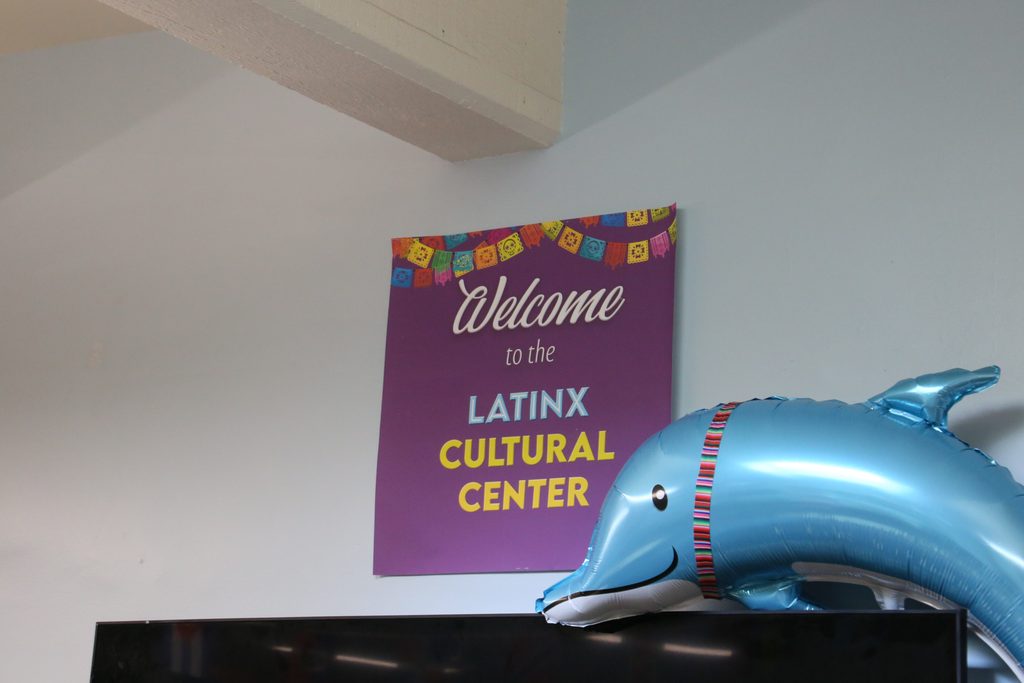
All dolphins are welcome in the LatinX Cultural Center!
Photo by Chelsea Grandpre
