By Evgeniya Lautt
Graphic By Evgeniya Lautt
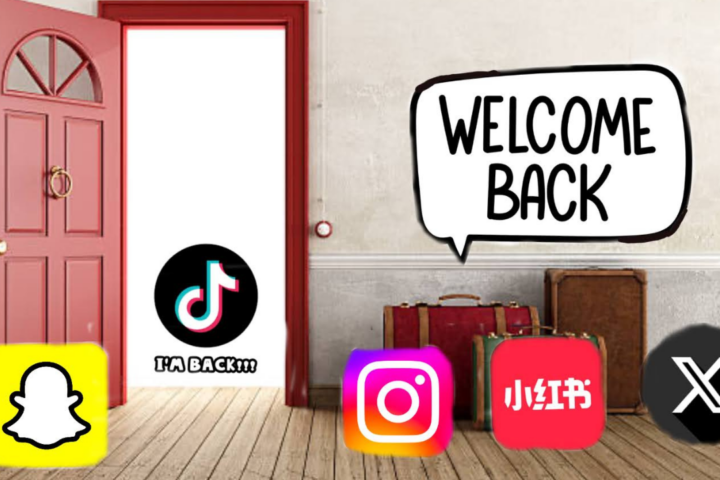
Just like the cinematic return of a beloved superhero in “Spiderman 2,” Americans received some welcome news the morning of Feb. 13: TikTok has been restored to both the iOS App Store and Google Play. This resurgence follows a brief but impactful ban that began on Jan. 19 leaving many users waking up to the frustrating message, “Sorry, TikTok isn’t available right now,” plastered across their phone screens. The sudden absence of the popular short-form video platform left a void in the daily routines of millions, raising questions about its future and prompting a scramble for alternative social media outlets.
The ban, while short-lived, served as a stark reminder of the precarious position of social media apps within the complex landscape of global politics and data security concerns. The reasons behind the ban were never fully disclosed, fueling speculation about potential national security risks and data privacy issues. This ambiguity only amplified the anxiety surrounding the app’s future in the United States. While the restoration offers a moment of relief, it also underscores the fragility of TikTok’s presence and raises the ever-present question: for how long will this reprieve last?
The impact of the ban, even for a short period, was significant. Users were forced to confront the reality of a world without their favorite platform, leading to a mass migration to other social media havens. An anonymous poll conducted to gauge where users turned during the TikTok blackout revealed interesting trends.
Unsurprisingly, Instagram emerged as the clear frontrunner, capturing a commanding 77 votes. Its established infrastructure for short-form video content and large user base made it a natural substitute. Red Note, a relatively newer platform, garnered a respectable 34 votes, suggesting a growing interest in alternative social media experiences. Twitter, with its focus on real-time updates and concise communication, received 10 votes, while Snapchat, known for its ephemeral messaging, garnered 3. A significant portion of respondents, 15 votes, indicated they explored “other” platforms, highlighting the diverse and evolving nature of the social media landscape. This dispersion of users across various platforms demonstrates the influence TikTok wields, but also the adaptability of its user base.
The poll results offer a glimpse into the potential consequences of a longer or more permanent ban. While Instagram appears to be the most obvious beneficiary, the rise of Red Note and the exploration of other platforms suggest that the market is ripe for disruption. The ban, while ultimately reversed, may have inadvertently accelerated the search for the next big social media phenomenon. Whether TikTok can fully regain its previous momentum remains to be seen. The company will need to address the underlying concerns that led to the ban in the first place and work to rebuild trust with its user base. The clock is ticking, and the future of TikTok in the United States hangs in the balance.
